Two Toms Talking Theology
-
This comic was drawn by R.E. Ryan, who did a great job rendering my silly
version of Colonial America. TRANSCRIPT OF CARTOON This cartoon has four
panels, ...
"What was old is new again".
-
As I sat watching these masked men march in Washington D.C. to celebrate
the 250th anniversary of this experiment in democracy called America, I
coul...
Me Too, including a multiplicity of voices
-
The past few months have revealed what feminists have always known and
fought against, namely that the extent of men’s sexual assault of women is
staggerin...
The Advantages of Online Courses for Adults
-
Online education has been quite popular in recent years, especially in a
society where digital technology is everywhere. Given the current
pandemic’s incre...
WHY BOGO RAN FOR SO LONG
-
After several extensions, we’re finally ending our Buy One Get One Free
promotion tonight so we can begin preparations for Black Friday. I am not
certain w...
The Bible's Guide to Health Care
-
First of all, if you get sick, it's your own damned fault. (God made you
sick for ignoring his voice, doing wrong in his sight, and/or ignoring his
command...
Farewell :'(
-
For anyone who still reads this blog, I would like to say a big thank you
for your support thus far.
Z and I started this blog in 2008 when we were still s...
Von, What The Hell Happened To You?
-
Nothing...well almost nothing. I needed a break to travel for my job and
then a few months later I found out I'm (we, the husband and I) are
expecting our ...
Im Tired Of Blogging
-
In creating this blog its i was really just a way for me to get some use of
being a poli sci major in analyzing politics and the world around me. That
and ...
go on hiatus
-
Other work is calling me away from effective management of this blog, so
I'm going to take a break.
Many thank-yous to the uncountable readers, comment...
Drop It Like It's Hot
-
Well, we all survived another week. It's been a rough week as both the
boys have colds. The little one is particularly miserable and has been
cussing u...
Why do some African-Americans believe that we have to “take back” the n-word? You can only reclaim what was yours to begin with. The n-word was never ours. It has only been used to subjugate us and strip us of our humanity. What self-respecting person would want to claim that poison?
Instead of claiming what was intended to demean us, why don’t we take back what was ours, namely our hair? African-Americans have let go of our hair, to the point that most of us don’t even know what our own natural hair looks like. We, and the rest of America for that matter, think that straight hair is normal for everyone, and view our own natural curls as strange and unusual. More critically, not only have we abandoned our own hair, we readily express contempt for it, calling it dirty and “nappy.” Why don’t African-Americans take back our hair?
Why don’t we reclaim our skin? Instead of using terms like “redbones” and delivering backhanded compliments to each other such as “You’re pretty for a dark skinned girl,” why don’t we celebrate our dark hues?
If we only strived to take these things back, rather than racial slurs, we would make more progress.
Two stories irritated me today. The first was about a woman who was denied a job because locks. Her supervisor considered locks to be an "extreme hairstyle." People who consider natural hair styles to be "extreme" our delusional. I wear an afro because that hair texture is what is dictated by my genetic code. There's nothing, odd, unusual or extreme about it. If our natural hair is extreme, so is our chocolate skin. However, it is our fault as African-Americans that this problem persist. We went through so much effort to forget about our afro hair in an attempt to assimilate that no one respects it as a racial trait. If we did not drop the ball in this area, deny someone of a job because her hair texture was not European enough would be seen as racist as telling someone that she was not light skinned enough to get a job. That's why I am so glad when I see other naturals. We must support natural hair to make America understand that our it is our genetic feature so that the discrimination and mockery of our hair will stop.
This derision of our features is in the same class as black face and is not acceptable.
The second unfortunate story I found today is regard's France's promotion of a bill the banning wearing a wearing a full Islamic veil in public. As I have said before, I believe that organized religion is detrimental and I would like to see it lose it's prominence, but this makes me sick. France has no right to deny people the ability to express themselves the way that they choose. These women are not hurting anyone, nor are they affecting anyone else by their choice of clothes. There is no excuse for this, and I hope it gets struck down. This is nothing but an out lash of hatred, but this is evident. The spokesperson for the president, Luc Chatel, said
"We're legislating for the future. Wearing a full veil is a sign of a community closing in on itself and a rejection of our values."
In other words, assimilate or face the consequences. Both of these stories are examples of people being threatened simply because others are different from them. Society must learn that just because someone does not conform doesn't mean they are automatically dangerous.
"I am a woman who came from the cotton fields of the South. From there I was promoted to the washtub. From there I was promoted to the cook kitchen. And from there I promoted myself into the business of manufacturing hair goods and preparations. I have built my own factory on my own ground." Madame CJ Walker
During this month as we recognize African-Americans' achievements, no doubt Madame C. J. Walker will be a prominent figure, as she indeed should be. She was born of former slaves and was orphaned at an early age. Yet despite her impoverished background, she founded her own company and became the first female to become a millionaire because of her own achievements.
Now, I suppose that if you lived in the days Madam C.J. Walker Manufacturing Company was founded, the future of industry for Black America would seem exceptionally bright. After all, an innovative African-American lady has already taken steps to establishing the hair care industry for us and has become a millionaire. With additional work, we could have a thriving economy. If you fast-forward to 2010, however, you can see that this magnificent dream was shattered because unfortunately, although Blacks didn't realize that big money was to be made in our hair care industry, others did. The Koreans and other ethnicities took over the Black hair care industry and helped turn it into the $9 billion dollar giant that it is today--money that could be used to reduce our poverty and further our own community. What makes this even more disturbing is that Madam C.J. Walker was able to achieve such success even though she was born in poverty and had to confront the enormous set backs of being both African-American and a woman (she even died before women had the right to vote for goodness sake). With all of the opportunities we have today, there is no excuse for us allowing others to takeover our own industry. We control where the money goes, and we are responsible for whether or helps us or lines another's pocket.
Madam C.J. Walker innovation is inspirational but it should certainly not ended. We must follow her example and control our own economies.
Our people have to be made to see that any time you take your dollar out of your community and spend it in a community where you don't live, the community where you live will get poorer and poorer, and the community where you spend your money will get richer and richer. Then you wonder why where you live is always a ghetto or a slum area...it's time now for our people to be come conscious of the importance of controlling the economy of our community. If we own the stores, if we operate the businesses, if we try and establish some industry in our own community, then we're developing to the position where we are creating employment for our own kind. -- Malcolm X, The Ballot or the Bullet. Read here or listen below
I have made a couple of post about African-American women and our hair issues, but I have yet to share my own journey regarding how I have come to feel the way I do about my hair. My relationship with my hair has taught me many valuable lessons but one that I shall share here is: do not fit a square peg into a round hole.
When I Hated my Hair My hair has never been permed or straightened at any point in my life, so during my childhood I always felt that my natural hair, in its pigtails, was a curse. The highest point in my elementary school career, during the third grade, was when I got braids for the first time. I was so proud that my hair could swig like "it should." However, my elation didn't last. My hair wasn't long enough. I knew that I couldn't get a relaxer because I had been told that they fry hair to death, and I definitely didn't want to look like the scores of girls I'd seen with relaxers so bad that it looked like their hair had been set on fire. The only option left for me was to get long braid extensions. Those were great to me. I had the long flowing hair without the pain of a relaxer. But they didn't appeal to me completely because I knew they were not equal to the Standard. So when I got older I was determined to get a weave (although I had no idea how weaves actually worked). I thought my natural hair was too long to wear a weave and wanted to cut it short. My mom thought I was crazy, but my reasoning was if you never wear natural hair out what is the use of it anyway? Besides that, I felt painfully embarrassed by hair. I could not go outside with it loose without my head being covered with a scarf or a hooded jacket. The only time I thought you were supposed to see it was when it was being "done" between extensions. (Looking back I think it is so sad that I thought that Black hair was so worthless that I was willing to cut it.) But back to the point, the extensions I had at this time looked too natural (everyone thought I had really long dreadlocks). Subconsciously, I knew I wasn't close enough to the Standard so I took the final step that would bring me closer to perfection. I got a sew-in, which was an ego boost for me (everyone would fawn over "my" hair). I finally had the hair that I'd ask God to miraculously change in elementary school. At the time, I did not make any connection between my relationship with my hair and any biases or prejudices I had against African features. If I heard anyone questioning why African-American women perm/press/weave our hair, I joined in with the scores of women saying it was because of convenience or citing that white women wear weaves too. However, even though my European-styled hair made me feel complete, I still felt uncomfortable. My mind was always on whether my tracks were showing and the like. Even though I felt pretty, I never felt right.
Turning Point I realized that I was on a spiraling down on a path to no where when I heard a question by Malcolm X , "Who taught you to hate yourself?"
My initial reaction to this and of all of the others who had suggested that Black women who perm/press/weave had a problem was to reject the suggestion altogether. After all hair was just hair. White women style it however they want to, so why couldn't Black women? However, after examining the relationship I had with my hair I realized that it was never the case. From the moment that I became aware of its distinctiveness, I wanted to change it to something straighter or longer. If it was just hair, why did I try to hide it so much? In short, this question caused me to reexamine not only my views on my hair but society as a whole, but at this point, I will expound upon a single lesson that I gained from accepting my natural hair:
Black women as a group are like square pegs created in a society that is designed for round ones. We spend the majority of our lives chipping ourselves down, damaging ourselves mentally and physically, trying to make ourselves fit into a standard that wasn't set for us. I never was happy with my hair because I could was never equal to the Standard. I finally became content when I understood that my hair isn't supposed to look long and straight--that the rules for straight hair were completely different than those for mine. When I stopped seeing myself by how well I fit into European views, my eyes opened to how beautiful natural hair was. When I looked in the mirror, I stopped worrying "How can I get this straighter" or "How can I get my curls more defined." I realized that this is the way my coils are supposed to look and I will never be content if I try to make my it anything less than it is.
We cannot be truly happy or content with our lives until we come to the realization that there is a hole designed specifically for us to fit. When we chip ourselves down to fit the standard for someone else, we are only damaging ourselves.
I recently read on Essence that an Australian scientist is working to develop a pill that will make curly hair straight. This isn't new, however. Five years ago, ABC reported that L'Oreal researchers are creating a pill that will do the same. Apparently, these pills could replace relaxers and flat irons one day, but as Tia Williams pointed out, as scientist isolate the gene that makes our curly, it may eventually be removed altogether.
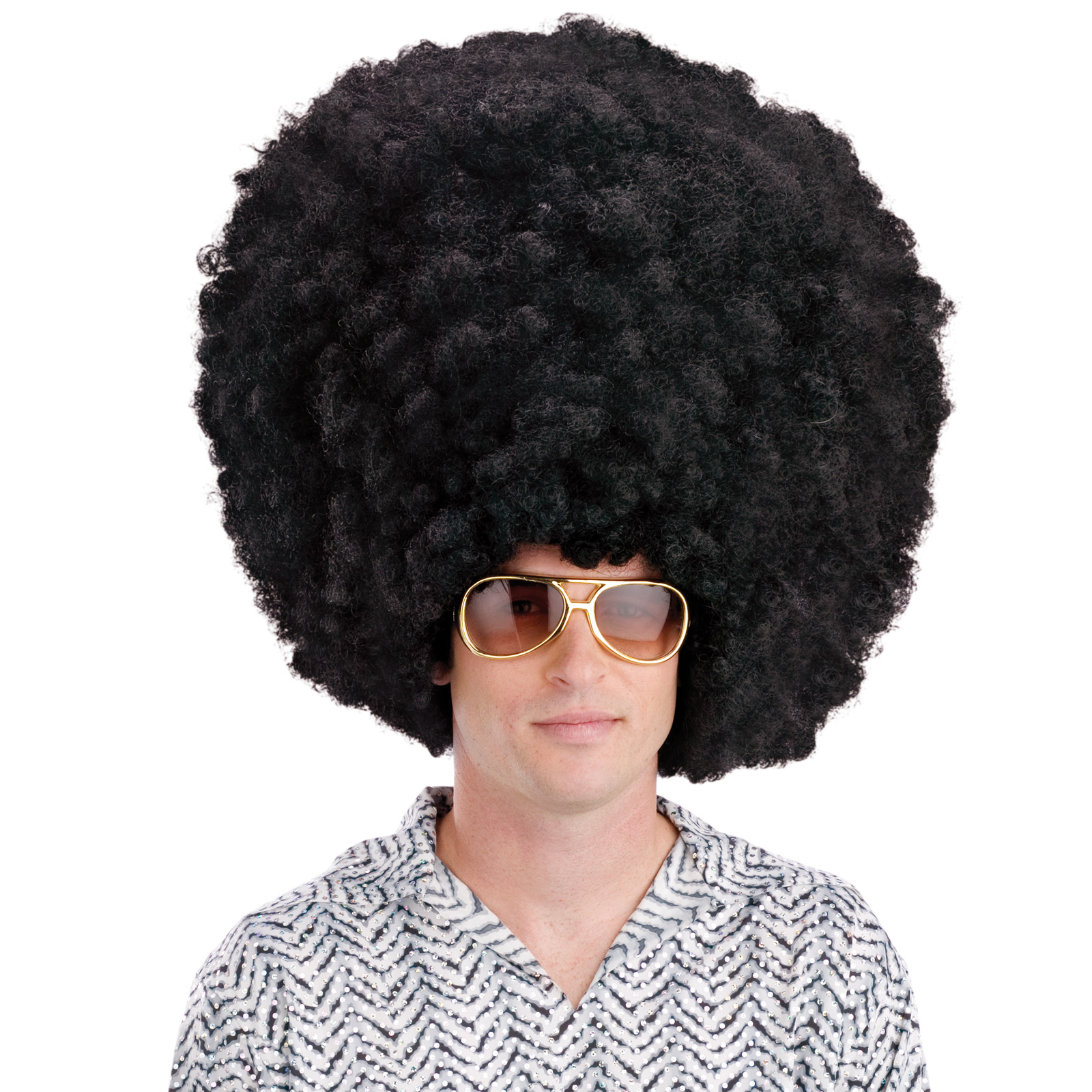
Our efforts to integrate diversity in our culture are being counteracted by this type of "progress." Why should we face the stigma our natural hair has when it is becoming increasingly easier just to chemically alter it in order to forget that we weren't born with what the world labels a genetic mistake. Instead of teaching society to embrace genetic diversity, we will jump at the chance to consume a product that brings us closer to the European standard. To make matters worse, as more of us transform ourselves to look European, we support the fear and ridicule of natural hair, reducing it to nothing more than being something foreign or a relic of the 70s. In fact, it practically is already. For example, why is it okay for white people to wear huge afro wigs in an effort to look clownish when it is offensive for them to go in blackface to look silly or pull their eyes mocking Asians. Blacks have no problem allowing them to mock our hair because we continuously try to separate ourselves from it. The uniqueness, respect, and beauty of our natural hair will continue fade as producers make products to match our cravings for straight hair.
Another consequence of this our powerful urge to assimilate and conform is a uniform dull world (sort of like the extreme society that is painted in "Eye of the Beholder"). As skin lighteners, hair straighteners, and surgical procedures bring cultures around the globe closer to a single ideal, encouraging us to lose appreciation for racial diversity, we create a world where everyone has similar features. How beautiful would the world be if it lacked its variety?
On a side note, this article from Essence reminded me of the Coil Review's excellent commercial:
This is partly a response to AJR's post where she says how she's sick about the politics of Black hair, and that hair shouldn't matter. I disagree.
Now first of let me say that I don't think it's a sin to press hair or to wear a weave. I don't think that there is anything wrong with changing it up hear and there. However, I do not think that it is "healthy" for Blacks to chemically alter our hair or to always hide it with a weave.
The first thing many women will say to defend their non-natural state is that white women perm, press, curl, and weave up to. However, they fail to recognize that that we are not white. Black women and white women are not in the same situations, are not viewed the same way, and are not held to the same standard, so white women can not possibly be used to justify black hair choices. White women have been romanticized as Cleopatras and Aphrodities for ages. Black women have been forced to be Aunt Jemima's through the years. As a result, white women's hair choices don't impact them the way that black women's do. Most white women don't pretend to have an afro through childhood, and when I see pictures of whites trying to look silly, I see them wearing afro wigs, not long flowing blond hair. Black hair has a stigma. What percentage of black women do you think would walk down the street with an afro?
Anytime that someone puts significant time, effort, and money to change something, it matters. Anytime a portion of a population alters itself to look like the majority, it matters. If you would never wear your hair in its natural state, hair matters to you.
Hair is not irrelevant because it is a reflection of culture and therefore a reflection of self. What do you think when you see a woman walking down the street in a sari ? You know she has Indian heritage, and any other perceptions you have about her are subject to your possible prejudices about Indians. Likewise, when many people see women in scarfs or burqas, they assume that they are oppressed or think little of themselves. What do people think when they see a woman in an afro. People frequently say that she looks uneducated, unprofessional, or something similar. This is because they recognize an afro as being a Black feature and since one has Black features she must also carry the negative attributes of Blacks.
We're all aware that Black characteristics carry strong negative connotations around the world. Therefore, the more "Black" one looks, the more these negative undertones will be attributed to that person. This is why people bleach their skin. This is why people straighten their hair. We do not choose our hair styles at random because they matter. We not only pick the styles we like based on our own preferences, but the preferences of others. People naturally want to be accepted by other's, and if that means changing themselves to look more white, they will do so. It's important to know why we make our decisions. Every choice we make is relevant because it is based on something learned. This includes hair styles.
My perception of people is generally negative, positive, or neutral. Chris Rock was in neutral status, until he produced Good Hair. When I saw the trailer, I was extremely disappointed. It didn't address the politics of Black hair. On the contrary, Chris Rock decided to use the emotional confusion that Black women experience with our hair and capitalize on it. I have been intensely following this Good Hair since it was announced, and I have come to the conclusion that Chris Rock does not respect black women nor is he trying to help black people with this film. He's just as caught up in the concept of good hair as all of us, and has no intention of tearing down Blacks' mental chains. This movie has no other purpose than to entertain whites.
Chris Rock Does Not Respect Black Women I'll start this from a quote from the man himself:
Barack Obama has a black wife. And I don't think a black woman can be first lady of the United States. Barack has a handicap the other candidates don't have: Barack Obama has a black wife. And I don't think a black woman can be first lady of the United States. Yeah, I said it! A black woman can be president, no problem. First lady? Can't do it. You know why? Because a black woman cannot play the background of a relationship. Just imagine telling your black wife that you'e president? "Honey, I did it! I won! I'm the president." "No, we the president! And I want my girlfriends in the Cabinet! I want Kiki to be secretary of state! She can fight!"
The comment pretty much speaks for itself. Here, Rock is making his sister, a woman who has more education than he will ever have, sound ignorant simply because she is a Black woman. Brava, Chris Rock.
Apparently, black women are stupid and self-absorbed, which is funny. So it makes sense to make a movie out of that. So hear we have a movie mocking black women spending so much time, effort, and money making our hair texture look like someone else's. We're even buying someone else's hair and installing it into our own, and it's...hilarious? Really? According to Chris Rock, this is all a joke. He doesn't address that a whole race of women wouldn't do this for so many decades for no reason. He does not discuss the "why." He does not about talk where this mentality comes from. (He avoids this topic completely because he doesn't want to make his white audience upset but rather amuse them.) There is obviously something seriously wrong if a whole race of people are ashamed of their hair texture. The A.V. Club made great points:
The film is filled with sadly telling moments, like a black beauty student telling Rock that she'd have a hard time taking a job applicant seriously if he had an afro, yet its tone is one of amusement rather than indignation. Rock is an entertainer, not a polemicist, and Good Hair will never be mistaken for a college course in African American Hair And Racial Identity, though it does stress the pain women will endure and the exorbitant prices they'll pay to keep up with follicular trends. To the film's subjects, paying thousands for a complicated, high-maintenance weave is less a luxury than a necessity, even for those low on the socio-economic scale.
In order for Chris Rock to make a movie mocking Black women's insecurities this way, he must have little respect for us. In addition, in order for him to think that it's hilarious that Blacks believe that wearing our natural hair is so unacceptable that we must change it, shows me that he has little respect for his own people. I started to realize this even more after he was on the Oprah show. He could not get his fingers out of her hair, and was practically worshiping it on stage. He then said that Stedman was a lucky man. To make matters worse, he calls Oprah's natural hair "slave hair." And he wonders why his daughter was crying? Give me a break! I remember seeing him have a similar reaction when having an interview with a white woman. He didn't touch her hair, but he stated how he would love to run his hands through it and was practically drooling. Chris Rock believes in "Good Hair" as much as any other Black person.
I also hate how he avoids the real issue behind this "good hair" sentiment among Blacks, and maintains this "It doesn't matter what hair style you have, as long as you like it " stance. If that is true, what was the point of laughing at all of these women for perming and weaving in this movie? The only thing that he did was state the obvious. Black people know what we do to our hair. This was only an eye-opener for the whites, and it was for their entertainment. Of course, they thought it was hilarious how all of these Negroes are changing themselves to look like them. That's was the point of this film, to amuse the white man at the black woman's expense.


 Posts
Posts