"A promise is a comfort to a fool."
-
There are some words that just scream bullshit. For example, the check is
in the mail, I am just around the corner, or I promise I won't cheat on you
...
The Boys That Cried Skynet - Insanity Check
-
We’re back with a new Insanity Check episode with Kriss & Ro and we’re
talking A.I. Doom bullshit that is back in the news. But this time it’s
really ann...
The Basic Barrier
-
Another collaboration with the chicken-fat-mad Mike Lawrence! That
trap-filled hopscotch board was entirely Mike’s idea. TRANSCRIPT OF CARTOON
This cartoon...
Me Too, including a multiplicity of voices
-
The past few months have revealed what feminists have always known and
fought against, namely that the extent of men’s sexual assault of women is
staggerin...
The Advantages of Online Courses for Adults
-
Online education has been quite popular in recent years, especially in a
society where digital technology is everywhere. Given the current
pandemic’s incre...
WHY BOGO RAN FOR SO LONG
-
After several extensions, we’re finally ending our Buy One Get One Free
promotion tonight so we can begin preparations for Black Friday. I am not
certain w...
The Bible's Guide to Health Care
-
First of all, if you get sick, it's your own damned fault. (God made you
sick for ignoring his voice, doing wrong in his sight, and/or ignoring his
command...
Farewell :'(
-
For anyone who still reads this blog, I would like to say a big thank you
for your support thus far.
Z and I started this blog in 2008 when we were still s...
Von, What The Hell Happened To You?
-
Nothing...well almost nothing. I needed a break to travel for my job and
then a few months later I found out I'm (we, the husband and I) are
expecting our ...
Im Tired Of Blogging
-
In creating this blog its i was really just a way for me to get some use of
being a poli sci major in analyzing politics and the world around me. That
and ...
go on hiatus
-
Other work is calling me away from effective management of this blog, so
I'm going to take a break.
Many thank-yous to the uncountable readers, comment...
Drop It Like It's Hot
-
Well, we all survived another week. It's been a rough week as both the
boys have colds. The little one is particularly miserable and has been
cussing u...
I did an earlier post complaining about how the Conservatives had been crying that we need to start racially profiling people because of how the Muslims are all out to get us. But now today we have a white man smashing his plane into a Federal building because of his anger with the government. If his name were Abdul, we would have an uproar right now. Glenn Beck, Palin, and their minions would be waving this triumphantly as another example of why we need to stop being so "politically correct" and start racially profiling people to keep those scary dark sinned people at bay. However, since he has an "American name" (Beck should be happy about that), let's see what sort of reaction from them we get. Of course, so far he hasn't been labeled a terrorist. Apparently, if you are white and crash a plane into a building, you only want to commit suicide, but if you are Arab/Black and want to do the same, you are a terrorist. Well, since wehave this rule, the Conservatives won't have to address yet another example of the fallacy of their reasoning. I know you may think this is unfair, but, you see, if we used this (and similar incidences) to prove that racially profiling is wrong, we would have to admit members of the white race can be terrorist just as minorities can be. And we just couldn't do that because then we be denying the principles that the Western society was founded on--that Europeans are superior to all other groups. Rejecting this fundamental value of our society would eliminate white privilege and might even help to bring equality to our land. That's why the actions of Joseph Andrew Stack could never be labeled an attack. If we started to acknowledge things like this, Western civilization could fall apart.
Another observation from this incident: Interesting how the Tea Partiers and their friends are so against the terrorist when they have so much in common: their disgruntlement with the American government, their extreme religious beliefs, and reverence of their martyrs (as the several Facebook and webpages that cropped up directly after Joseph Andrew Stack's attack suicide). You know, if they weren't so rabid, they might just hit it off.
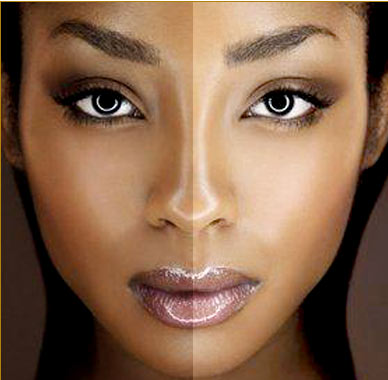
I'm bothered when European-Americans say or imply that the treatment that African-Americans receive is a direct cause of us behaving in stereotypical ways or, in other words, more often that not we live our lives in harmony with a stereotypical script. As a result, many African-Americans fervently hope that if one day we can stop all of us from behaving in a stereotypical way, we will have a better image. I wish for the day when all African-Americans will stop behaving stereotypically as well, but not for the hope that they will be eliminated completely because they never will. African-Americans will always be stereotyped as inferior in every aspect to European-Americans because this has been ingrained even before this country was founded and now is in the fabric of our culture. Successful African-Americans are thought of as being propserous in spite of their Blackness. They are an exception, an example of the positive outcomes of assimilation, or simply they "act white." In short, the more respectable or admirable an African-American is, the more white he or she will be perceived; and the more negative characteristics an African-American has, the more black he or she will be judged. A perfect article that illustrates how "Black" we are perceived based more on our actions rather than our skin color was released on Newsweek about how those who support Obama see him as lighter skinned, and those who view him negatively see him darker:
When it comes to the policies and politics of Barack Obama, it's no secret that liberals and conservatives don't see eye to eye. But according to behavioral sciencist Eugene Caruso of the University of Chicago's Booth School of Business, these differences in perspective may literally be a difference in perception. In a new study, Caruso and colleagues Emily Balcetis of New York University and Nicole Mead of Tillberg University asked a group of undergraduates which of a series of photographs of both Obama--some of them secretly lightened and darkened--best represented who he is as a person. The results were striking: while self-described liberals tended to pick the digitally lightened photos of the president, self-described conservative students more frequently picked the darkened images. The more you agree with a politician, in other words, the lighter his skin tone seems; the less you agree, the darker it becomes. To discuss how political affinities influence perception--and how politicians and the press could take advantage of these findings--NEWSWEEK's Andrew Romano spoke to Caruso. Excerpts:
How did the study actually work? Essentially we were interested in whether political party influences how people literally see the world, and how they may see different depictions of candidates as representative of who they really are. So to test this we gathered up a bunch of photos of Barack Obama and digitally altered them to create a version where his skin tone appeared a bit lighter and a version where his skin tone was a bit darker than it appeared in the original photograph. And then we just showed people several different photos and asked them to rate each one on how much they represented who he really is. What we found was that participants who told us that they had a liberal political orientation rated the lightened photographs as more representative of Obama than the darkened photographs, whereas participants who told us they had a more conservative ideology rated the darkened photographs as more representative of Obama than the lightened ones.
So how much of a difference between self-identified liberals and self-identified conservatives did you find in the results? It’s a little bit hard to quantify the difference because they were just rating on a 7-point scale of representativeness. So to make it a bit more concrete we looked, for each participant, at which photo they rated as the most representative. They gave us three different ratings—say 1, 4 and 6—and we picked the photo that they gave the highest number to. From there we saw that liberals were about five times as likely to rate a lightened version of Obama as the most representative compared to a darkened version, whereas conservatives were about twice as likely to rate a darkened version as most representative compared to the lightened version.
I’m no expert here, but you’re confident that it’s the skin tone that changes “representativeness” in the eyes of the voter, as opposed to something else about the photographs—like pose, or background, or facial expression? That’s a great question. What we did was essentially take three different photos with three different poses, and created for each photo a lightened and a darkened version. And then we randomly selected the combination of pose and skin tone that we showed each participant.
So your findings about “representativeness” were consistent across poses—the conservative will be twice as likely to say a “darkened” Obama was representative, regardless of which image of Obama was being darkened? Right. We were experimentally able to isolate the effect of skin tone because some people saw a lightened version of pose #1 and others saw a darkened version of pose #1—and independent of the pose the lightened versions seemed most representative to liberals and the darkened most representative to conservatives.
Were you surprised by the results? A little bit. Some of my research deals with how people who have different views on a subject are able to try to understand the views of someone on the other side, and the general finding is that people aren’t particularly good at really coming to understand the perspective of someone with whom they disagree. Beyond that, though, I got interested in this notion of whether our beliefs can actually affect the way we see the world—of whether they can actually affect our perception of objects or people in our environment. And it turns out they can.
Ultimately, what does it mean that someone believes a lightened version of Obama is more representative of him than a darkened version, and vice versa? What are the larger implications of these differences in perception? Partisanship can affect all sorts of beliefs. It’s not surprising that a liberal and a conservative who read the same health care bill would come to very different conclusions about its merits. But I think our work is more akin to having a liberal and conservative look at the exact same physical copy of a bill sitting on the desk in front of them and disagreeing over how thick it is. That is, even something that we feel we should be able to see similarly, like a person’s racial identity or physical characteristics, can be influenced by our desire to see that person favorably or unfavorably.
That’s fascinating. To extend that analogy, I guess you’d say that when a conservative looks at the current health care reform bill on the table, he sees it as really thick and interprets that thickness as meaning that the bill will create more red tape, more bureaucracy, more spending, whereas a liberal would see it as thinner and interpret that thinness as meaning that the bill will streamline an unwieldy system and reduce deficits over time. In other words, they’re seeing a physical attribute as a kind metaphor about the merits of whatever it is they’re looking at. How does that work with Obama and skin tone? There’s a long history in Western society of associating lightness with good and darkness with bad. Throughout history, throughout literature, et cetera. And we know now that these associations sometimes apply to the color of a person’s skin, and in addition to associating goodness with white, there’s some recent research in implicit attitudes suggesting that at an unconscious level people have a strong tendency to associate America with white. Which means that liberals, who are going to think that Obama is generally good and generally American, may have these subtle associations linking him to the concept of white, which is reflected in their representativeness ratings. The opposite would be true of conservatives.
But isn’t there a chicken or egg relationship here? Do conservatives see Obama as darker and are thus prone to dislike him, or do they dislike him first and then see him as darker because of it? That’s a great question. One of the things we’re trying to do now is experimentally try to tease those two options apart. Basically, what we have in our current paper, the one that’s out now, is correlational studies of Obama where we don’t really know what comes first or what’s causing what. The first study in the paper tries to address part of what you’re asking. If we get people to think about a novel candidate and simply manipulate whether they agree with a candidate or not, we can show that people who think this novel biracial candidate agrees with them later report that the lightened photos are more representative of him, suggesting that if you agree with someone then you may come to see him as lighter. From that we can speculate, exactly as you have, about the reverse path—and that is, seeing images of someone when his or her skin tone looks darker may cause people to like that person less than seeing images of that person with lighter skin tone.
Do you plan to study the second option? We’ve actually just recently completed a new study that’s not in the current paper that looks at this question. We had people read about this new biracial candidate in the Department of Education, and for some participants we had them read this candidate’s biography with an unaltered picture accompanying the biography, while for some participants we had them read the biography with a picture of the candidate that had been lightened or darkened. Then we had them tell us how they felt about the six issues facing the Department of Education, and everyone was told the same thing—which was that this guy agrees with you on three of the six issues on the table, so it’s unclear really whether you like him or not. Then we asked them to tell us how much they supported him and how likely they’d be to vote for him if given the chance. And somewhat remarkably, the participants who’d seen a darkened photo just a few minutes earlier reported that they were less likely to vote for the candidate than those who’d seen the lightened photo.
Could you imagine political campaigns using this sort of research in the future—you know, as more minorities run for office? I think our findings help explain the ways in which people may try to influence the level of support for, say, a biracial candidate. People have and may continue to strategically expose the public to images that alter certain characteristics of a person in the media spotlight. It reminds us of the Time magazine cover where an illustration had darkened an image of OJ Simpson following his arrest in 1994. Hillary Clinton’s campaign was actually accused of doing the exact same thing in the primary when it ran a television ad with a video of Obama during one of the debates in which the entire ad was artificially darkened. Although we didn’t find any direct evidence of this in our data, it’s possible that news directors may be susceptible to same sort of biases as our participants, without even really being aware of it, such that liberal and conservative media outlets may differ in the types of images of Obama that they tend to select and depict.
Which, in turn, could activate or reinforce whatever biases are already out there among voters as they see the candidates through the media filter—for example, an MSNBC viewer who is continually exposed to “lighter” images of Obama and who therefore tends to think of him as more “good” and more “American.” I wouldn’t advocate that people strategically try to manipulate things, but certainly political campaigns and ideologically-driven media outlets will always try to show their candidates in the best possible light.
So to speak. Right. It’s the same as scrutinizing haircuts and clothing to make people as appealing as possible to the voters. With the Clinton ad, the goal was to try to make Obama appear more ominous.
"I am a woman who came from the cotton fields of the South. From there I was promoted to the washtub. From there I was promoted to the cook kitchen. And from there I promoted myself into the business of manufacturing hair goods and preparations. I have built my own factory on my own ground." Madame CJ Walker
During this month as we recognize African-Americans' achievements, no doubt Madame C. J. Walker will be a prominent figure, as she indeed should be. She was born of former slaves and was orphaned at an early age. Yet despite her impoverished background, she founded her own company and became the first female to become a millionaire because of her own achievements.
Now, I suppose that if you lived in the days Madam C.J. Walker Manufacturing Company was founded, the future of industry for Black America would seem exceptionally bright. After all, an innovative African-American lady has already taken steps to establishing the hair care industry for us and has become a millionaire. With additional work, we could have a thriving economy. If you fast-forward to 2010, however, you can see that this magnificent dream was shattered because unfortunately, although Blacks didn't realize that big money was to be made in our hair care industry, others did. The Koreans and other ethnicities took over the Black hair care industry and helped turn it into the $9 billion dollar giant that it is today--money that could be used to reduce our poverty and further our own community. What makes this even more disturbing is that Madam C.J. Walker was able to achieve such success even though she was born in poverty and had to confront the enormous set backs of being both African-American and a woman (she even died before women had the right to vote for goodness sake). With all of the opportunities we have today, there is no excuse for us allowing others to takeover our own industry. We control where the money goes, and we are responsible for whether or helps us or lines another's pocket.
Madam C.J. Walker innovation is inspirational but it should certainly not ended. We must follow her example and control our own economies.
Our people have to be made to see that any time you take your dollar out of your community and spend it in a community where you don't live, the community where you live will get poorer and poorer, and the community where you spend your money will get richer and richer. Then you wonder why where you live is always a ghetto or a slum area...it's time now for our people to be come conscious of the importance of controlling the economy of our community. If we own the stores, if we operate the businesses, if we try and establish some industry in our own community, then we're developing to the position where we are creating employment for our own kind. -- Malcolm X, The Ballot or the Bullet. Read here or listen below
I have made a couple of post about African-American women and our hair issues, but I have yet to share my own journey regarding how I have come to feel the way I do about my hair. My relationship with my hair has taught me many valuable lessons but one that I shall share here is: do not fit a square peg into a round hole.
When I Hated my Hair My hair has never been permed or straightened at any point in my life, so during my childhood I always felt that my natural hair, in its pigtails, was a curse. The highest point in my elementary school career, during the third grade, was when I got braids for the first time. I was so proud that my hair could swig like "it should." However, my elation didn't last. My hair wasn't long enough. I knew that I couldn't get a relaxer because I had been told that they fry hair to death, and I definitely didn't want to look like the scores of girls I'd seen with relaxers so bad that it looked like their hair had been set on fire. The only option left for me was to get long braid extensions. Those were great to me. I had the long flowing hair without the pain of a relaxer. But they didn't appeal to me completely because I knew they were not equal to the Standard. So when I got older I was determined to get a weave (although I had no idea how weaves actually worked). I thought my natural hair was too long to wear a weave and wanted to cut it short. My mom thought I was crazy, but my reasoning was if you never wear natural hair out what is the use of it anyway? Besides that, I felt painfully embarrassed by hair. I could not go outside with it loose without my head being covered with a scarf or a hooded jacket. The only time I thought you were supposed to see it was when it was being "done" between extensions. (Looking back I think it is so sad that I thought that Black hair was so worthless that I was willing to cut it.) But back to the point, the extensions I had at this time looked too natural (everyone thought I had really long dreadlocks). Subconsciously, I knew I wasn't close enough to the Standard so I took the final step that would bring me closer to perfection. I got a sew-in, which was an ego boost for me (everyone would fawn over "my" hair). I finally had the hair that I'd ask God to miraculously change in elementary school. At the time, I did not make any connection between my relationship with my hair and any biases or prejudices I had against African features. If I heard anyone questioning why African-American women perm/press/weave our hair, I joined in with the scores of women saying it was because of convenience or citing that white women wear weaves too. However, even though my European-styled hair made me feel complete, I still felt uncomfortable. My mind was always on whether my tracks were showing and the like. Even though I felt pretty, I never felt right.
Turning Point I realized that I was on a spiraling down on a path to no where when I heard a question by Malcolm X , "Who taught you to hate yourself?"
My initial reaction to this and of all of the others who had suggested that Black women who perm/press/weave had a problem was to reject the suggestion altogether. After all hair was just hair. White women style it however they want to, so why couldn't Black women? However, after examining the relationship I had with my hair I realized that it was never the case. From the moment that I became aware of its distinctiveness, I wanted to change it to something straighter or longer. If it was just hair, why did I try to hide it so much? In short, this question caused me to reexamine not only my views on my hair but society as a whole, but at this point, I will expound upon a single lesson that I gained from accepting my natural hair:
Black women as a group are like square pegs created in a society that is designed for round ones. We spend the majority of our lives chipping ourselves down, damaging ourselves mentally and physically, trying to make ourselves fit into a standard that wasn't set for us. I never was happy with my hair because I could was never equal to the Standard. I finally became content when I understood that my hair isn't supposed to look long and straight--that the rules for straight hair were completely different than those for mine. When I stopped seeing myself by how well I fit into European views, my eyes opened to how beautiful natural hair was. When I looked in the mirror, I stopped worrying "How can I get this straighter" or "How can I get my curls more defined." I realized that this is the way my coils are supposed to look and I will never be content if I try to make my it anything less than it is.
We cannot be truly happy or content with our lives until we come to the realization that there is a hole designed specifically for us to fit. When we chip ourselves down to fit the standard for someone else, we are only damaging ourselves.
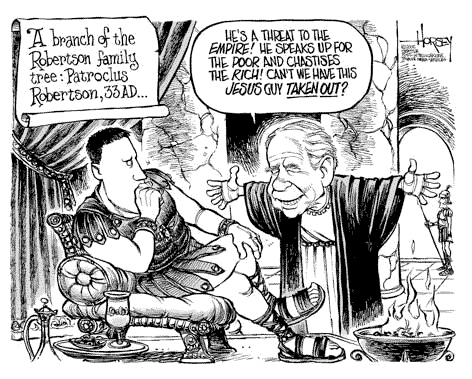
I wasn't surprised by Pat Robertson's comments on Haiti considering that similarly he had concurred with a statement that America was being judged for abortion and homosexuals during 9/11. But I won't bother talking about his character (because he speaks for himself) but rather his words because they reflect the sentiment of many Americans. This is a bit of a continuation of "American Christianity"
I believe that the story Robertson references about Haiti asking Satan to lead them out of slavery is myth that was another attempt to degrade Africans through religion, such as the tale that Blacks are cursed for being the descendants of Ham was designed to do. The idea has been propagated to discredit the Haitians for their achievement of being the only slaves successful of taking their land back through a revolt in history. Instead of giving the Haiti's the credit they deserve for their courage and determination, the West would rather believe that it was Satan who just gave the Haitians their freedom. Dr. Jean R. Gelin describes how this developed here
Haitian pastor Frantz Lacombe identified a ‘dependence mentality’ in the leadership of the Haitian church, which resulted from the way the Christian faith was brought to the country, historically and through various denominations. Apparently, this unfortunate manner of thinking, which tends to emulate the worldview and culture of North American and European Christian missionaries, has permeated the general philosophy of the Haitian church on many levels, including church planting, church management, music and even missionary activities.
In that context, I would not be surprised if the satanic pact idea (followed by the divine curse message) was put together first by foreign missionaries and later on picked up by local leaders. On the other hand, it is equally possible that some Haitian church leaders developed the idea on their own using a theological framework borrowed from those same missionaries who subsequently propagated the message around the world. Either way, because of this message, Haiti has been portrayed as the country born out of Satan’s benevolence and goodwill toward mankind. Shouldn’t such a fantastic idea be tested for its historic validity and theological soundness? I invite you to take with me a closer and possibly different look at the available records.
He continues to describe where this idea came from in parts two and three of his message. But in any case, Robertson's actions also illustrate that, besides being racially charged, American Christianity is often too ignorant of its own its own history and beliefs. I get tired of hearing about how America is being or is going to be judged because of abortion and homosexuality. Today being a Christian means little more than checking off "I'm against abortion" and "I'm against homosexuality," even though, as Greg Boyd says, "Yet, while we have at most six verses in the Bible that mention homosexuality, we have around 3,000 passages that address greed, gluttony and the need to care for the poor. Not only this, but if there are any sins American Christians are most guilty of, they’re greed, gluttony and apathy toward the poor. And if there are any sins that demonstrably kill people, it’s these ones. Yet Christians go after gays . Why? One can’t help but suspect it might be because it’s one sin they can feel self-righteous in condemning." Besides that, for so many American Christians, sin in America began with Roe vs Wade and the gay and lesbian movements, but what before that? Instead of saying that American is being judged for those sins, why don't they ever take into account the centuries of injustices of Africans, Native Americans, and immigrants at the hands of America. If they are so sure that God is angry at this country for sin, why don't they think His memory extends to those hundreds of years of horror? Why don't they think God is judging America for it's adoration of money or neglect of the sick and poor? They assume that God doesn't care about those matters because they do not matter to them. Finally, before making statements that God is judging anyone, they should take in account what He Himself said on the matter, verses that they so easily forget.
1 There were present at that season some who told Him about the Galileans whose blood Pilate had mingled with their sacrifices. 2 And Jesus answered and said to them, “Do you suppose that these Galileans were worse sinners than all other Galileans, because they suffered such things? 3 I tell you, no; but unless you repent you will all likewise perish. 4 Or those eighteen on whom the tower in Siloam fell and killed them, do you think that they were worse sinners than all other men who dwelt in Jerusalem? 5I tell you, no; but unless you repent you will all likewise perish.” (Luke 13:1-5, New King James Version)
I recently read on Essence that an Australian scientist is working to develop a pill that will make curly hair straight. This isn't new, however. Five years ago, ABC reported that L'Oreal researchers are creating a pill that will do the same. Apparently, these pills could replace relaxers and flat irons one day, but as Tia Williams pointed out, as scientist isolate the gene that makes our curly, it may eventually be removed altogether.
Our efforts to integrate diversity in our culture are being counteracted by this type of "progress." Why should we face the stigma our natural hair has when it is becoming increasingly easier just to chemically alter it in order to forget that we weren't born with what the world labels a genetic mistake. Instead of teaching society to embrace genetic diversity, we will jump at the chance to consume a product that brings us closer to the European standard. To make matters worse, as more of us transform ourselves to look European, we support the fear and ridicule of natural hair, reducing it to nothing more than being something foreign or a relic of the 70s. In fact, it practically is already. For example, why is it okay for white people to wear huge afro wigs in an effort to look clownish when it is offensive for them to go in blackface to look silly or pull their eyes mocking Asians. Blacks have no problem allowing them to mock our hair because we continuously try to separate ourselves from it. The uniqueness, respect, and beauty of our natural hair will continue fade as producers make products to match our cravings for straight hair.
Another consequence of this our powerful urge to assimilate and conform is a uniform dull world (sort of like the extreme society that is painted in "Eye of the Beholder"). As skin lighteners, hair straighteners, and surgical procedures bring cultures around the globe closer to a single ideal, encouraging us to lose appreciation for racial diversity, we create a world where everyone has similar features. How beautiful would the world be if it lacked its variety?
On a side note, this article from Essence reminded me of the Coil Review's excellent commercial:
A couple of days ago, ABC World News asked if we should implement racial profiling in response to the attempted attack by the Nigerian terrorist. Of course, this is not the first time that racial profiling has been supported. Many "brilliant"*smirk* minds such as Sarah Palin believe this is a great idea, no doubt because of the effectiveness of the racial profiling of the Japanese during WWII, which caused many to lose their lives and be destitute and resulted in the US paying over a billion dollars in reparations. Also, considering the United States' long history of racial discrimination and genocide, who wouldn't want to return to those happy times again? But besides these obvious reasons for racial profiling, one wonders why it hasn't suggested it before considering the frequent (non-Islamic) attacks that have been planned and implemented before 9/11. I'm not just talking about Columbine, Oklahoma City, and Virgina Tech, but other attacks which, for some reason that I just can't imagine why, the media doesn't like to stress as much as the Islamic extremist attacks. In short, Americans act like this regarding terrorism (yes, hearing those advocates of racial profiling motivated me to draw this. Cute, I know):
Gee, if they are going to start implementing racial profiling, they better target everyone (not just those people).


 Posts
Posts


 I did an earlier post complaining about how the Conservatives had been crying that we need to start racially profiling people because of how the Muslims are all out to get us. But now today we have a white man smashing his plane into a Federal building because of his anger with the government. If his name were Abdul, we would have an uproar right now. Glenn Beck, Palin, and their minions would be waving this triumphantly as another example of why we need to stop being so "politically correct" and start racially profiling people to keep those scary dark sinned people at bay. However, since he has an "American name" (Beck should be happy about that), let's see what sort of reaction from them we get. Of course, so far he hasn't been labeled a terrorist. Apparently, if you are white and crash a plane into a building, you only want to commit suicide, but if you are Arab/Black and want to do the same, you are a terrorist. Well, since we have this rule, the Conservatives won't have to address yet another example of the fallacy of their reasoning. I know you may think this is unfair, but, you see, if we used this (and similar incidences) to prove that racially profiling is wrong, we would have to admit members of the white race can be terrorist just as minorities can be. And we just couldn't do that because then we be denying the principles that the Western society was founded on--that Europeans are superior to all other groups. Rejecting this fundamental value of our society would eliminate white privilege and might even help to bring equality to our land. That's why the actions of Joseph Andrew Stack could never be labeled an attack. If we started to acknowledge things like this, Western civilization could fall apart.